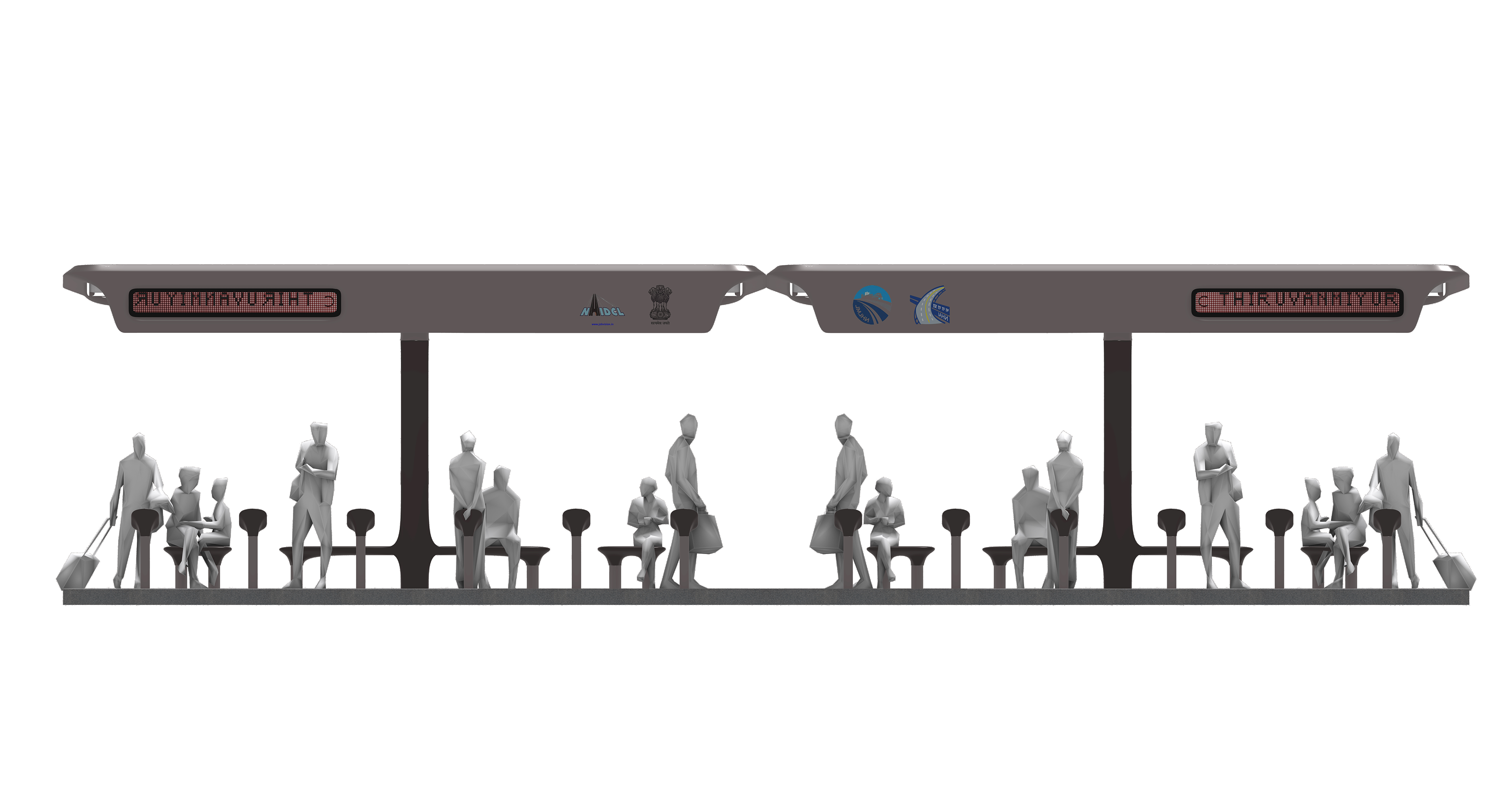
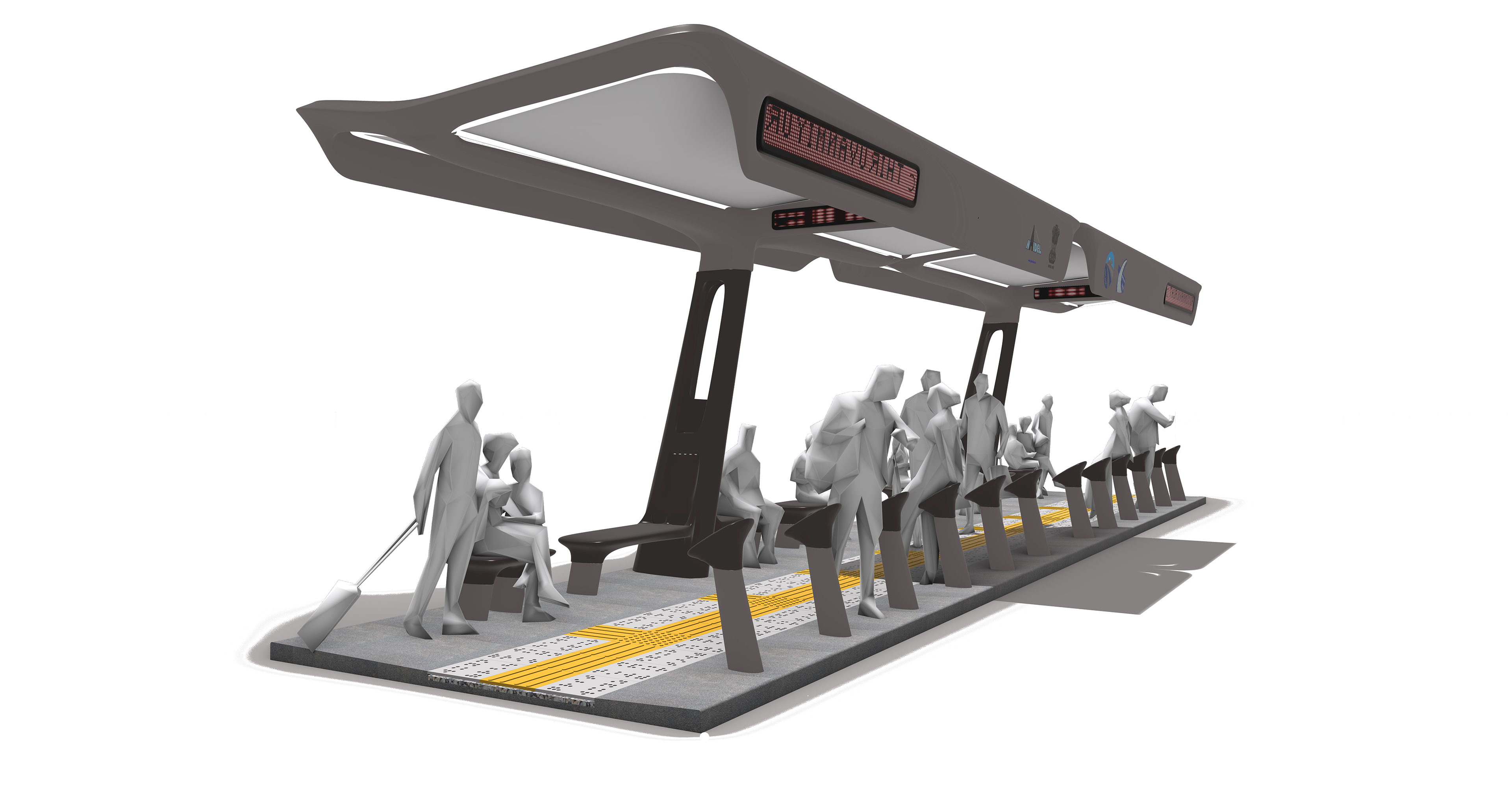
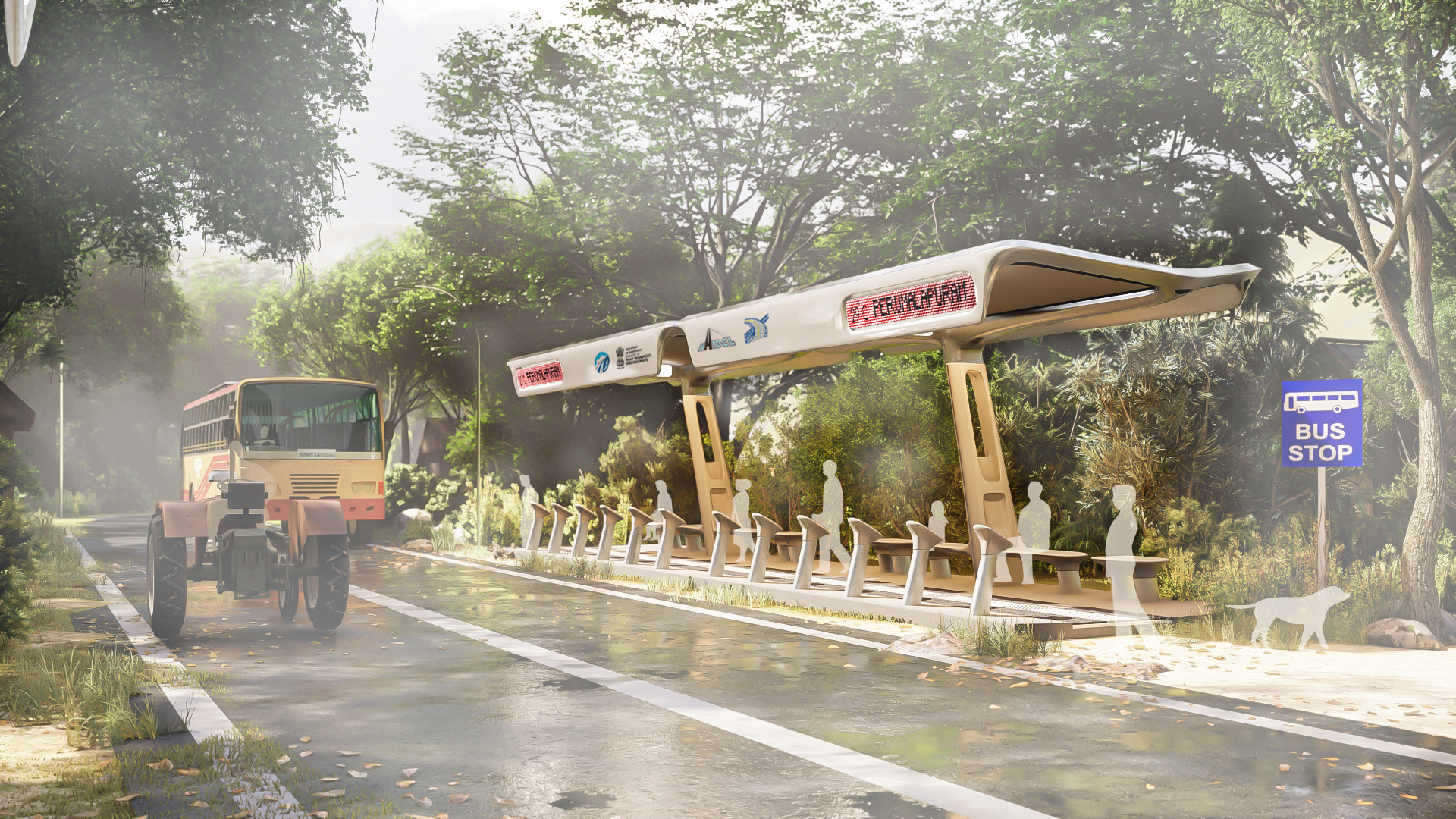
A bus stop is a simple structure, but the complexity of designing it lies in a holistic approach that combines various elements and factors such as technology, accessibility, safety and more.
Within the context of the bus stop being on a highway, it becomes important to understand that the design is governed by principles and requirements that are very different from what might govern the design of a bus stop within a city. The design aims to create a bus stop that integrates technology and effortless spatial planning, allowing it to be as efficient, safe, and user-friendly as possible for people from all backgrounds.
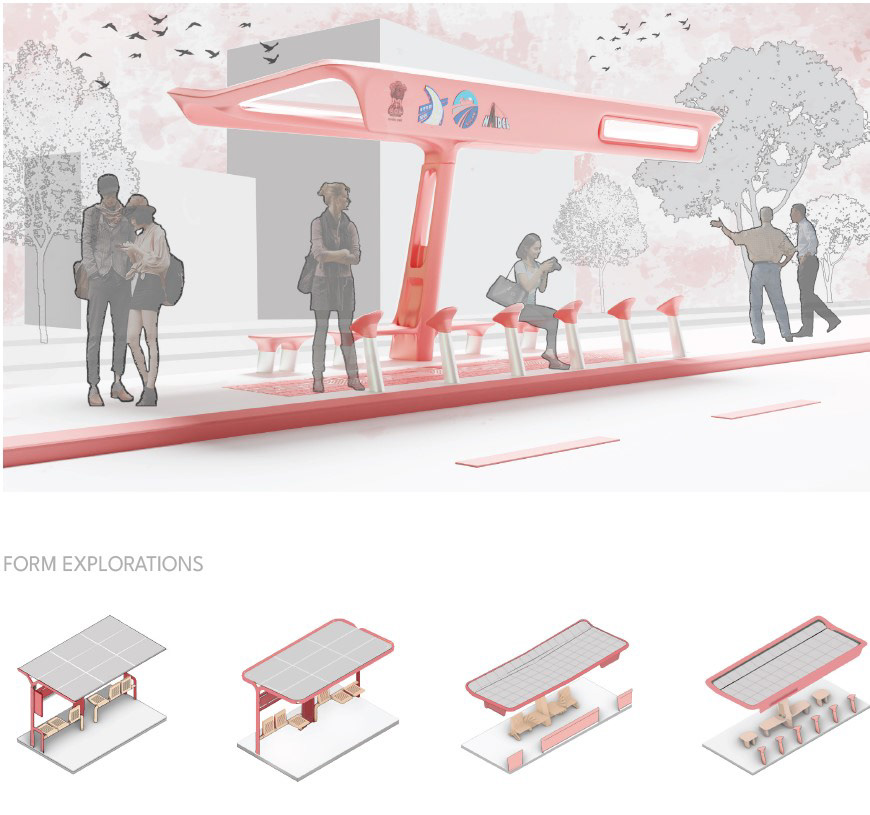
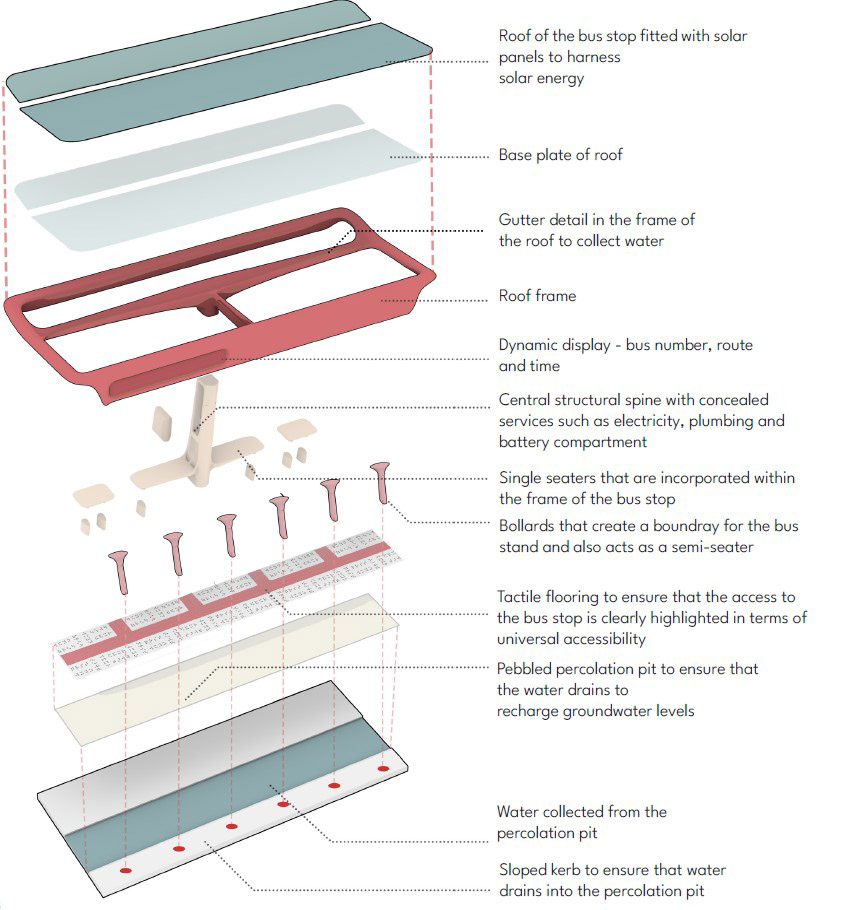
To allow the bus stop to be modular and prefabricated, the design needed to be straightforward to install and dismantle. While the form started from being geometric to integrate seating along the frame of the bus stop, the design then evolved into being curved with soft and rounded edges. Some of the concepts that governed the iterative process were vandalism, visibility, seating space, and lighting. The design transformed into an open bus stop with a central structural member, allowing the services to be concealed within the framework while maintaining the fluidity of the design.
Within a collaborative team setting, I was responsible for the preliminary research. I also did multiple case studies to help provide a rough outline of the context specific needs of a bus stop. The takeaways from the research helped each of us come up with initial iterations of the design.
I also spearheaded the process of putting together presentation sheets with the necessary information and actively worked on creating relevant presentation drawings required for the final submission.