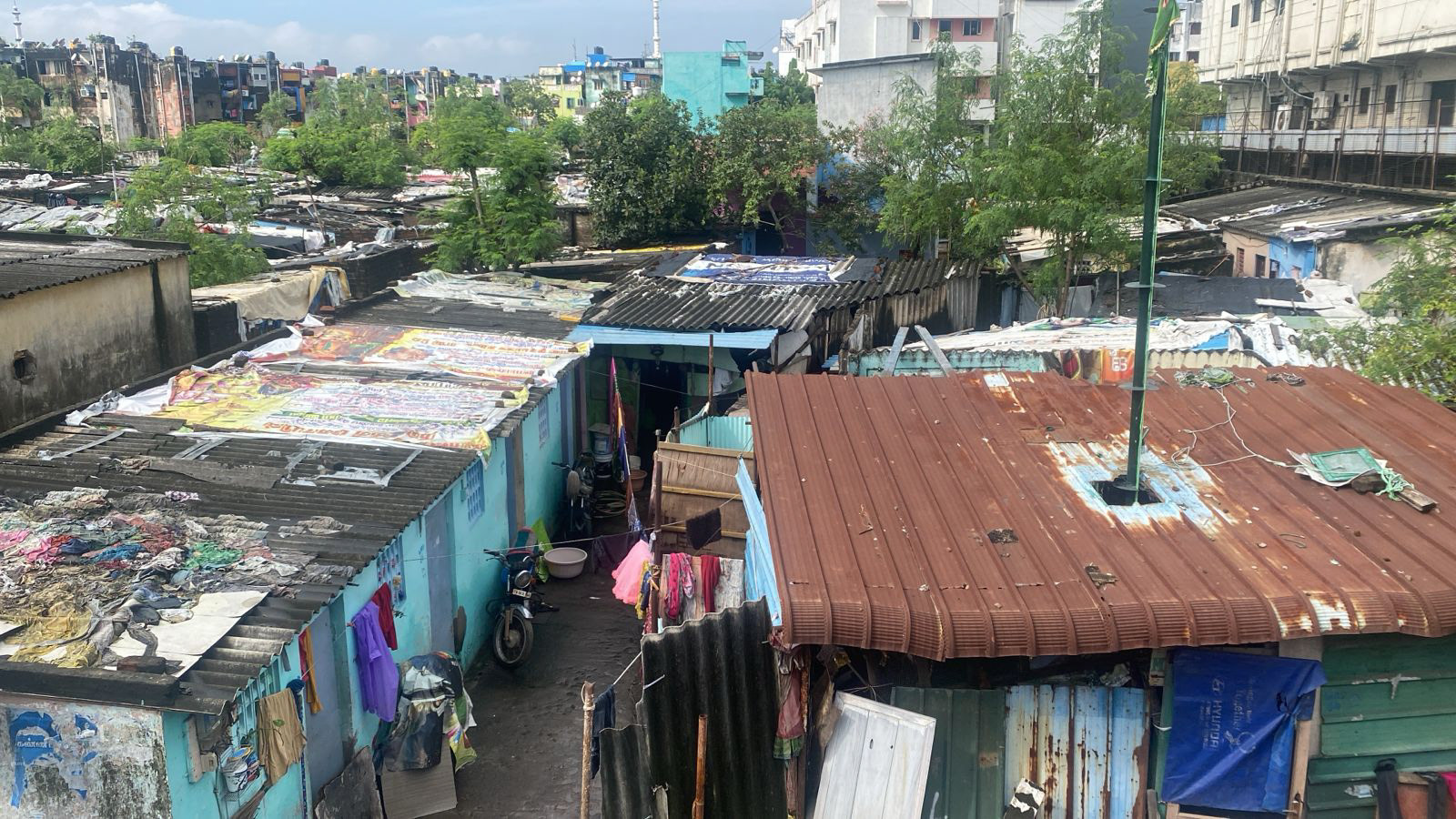
Chennai’s relationship with water and with its poorest residents is structured by inequality- governance responses continue to treat informal settlements as problems to be relocated rather than communities to be supported. In Dhideer Nagar, Saidapet, a riverfront settlement of approximately 300 families, flood vulnerability, livelihood loss, and displacement are not inherent conditions but produced by the result of infrastructure exclusion, insecure tenure, and policies that sever residents from the urban relationships they have spent decades building.
This thesis argues that resettlement, Chennai’s default response to informal riverfront settlements, compounds instead of resolving these vulnerabilities. Relocating communities to peripheral sites breaks the informal economic networks of domestic work, trade and labor that depend on proximity to the city and to one another. The research asks how these compounding conditions of flood vulnerability, threat to livelihood, and displacement can be addressed while protecting the social and economic fabric that residents have collectively built
The research proposes a phased, state-facilitated framework in which, housing, infrastructure, and ground-level spaces are reorganized as incrementally produced, resident owned resources. This takes the spatial form of cluster based incremental housing in which families own and can expand overtime, a holding house functioning both as temporary rehousing structure during remodel cycles and permanent civic space for daily life, and a phased blue-green riparian edge that transitions the settlement from ecological hazard to ecological participant along the river. The system of commoning is tested through design research at multiple scales, from the individual plot to the neighborhood. Using Dhideer Nagar as a projective site, this thesis advances not a singular solution but a transferable framework, arguing that in-situ redevelopment organised around commoning principles can produce ecological resilience, livelihood continuity, and spatial dignity without displacement, and that this logic is replicable wherever informal communities face dispossession in the name of urban development.
Dhideer Nagar, Saidapet
Dhideer Nagar is an informal riverfront settlement located along the Adyar River in Chennai. Positioned within a low-lying flood-prone zone, the settlement experiences recurring seasonal inundation during the monsoon, making it increasingly vulnerable to both environmental risk and redevelopment pressures. Like many informal settlements in Chennai, the site exists within a condition of insecure tenure, limited infrastructure, and inadequate access to formalized public services, while simultaneously remaining deeply integrated within the city’s labor and economic networks.
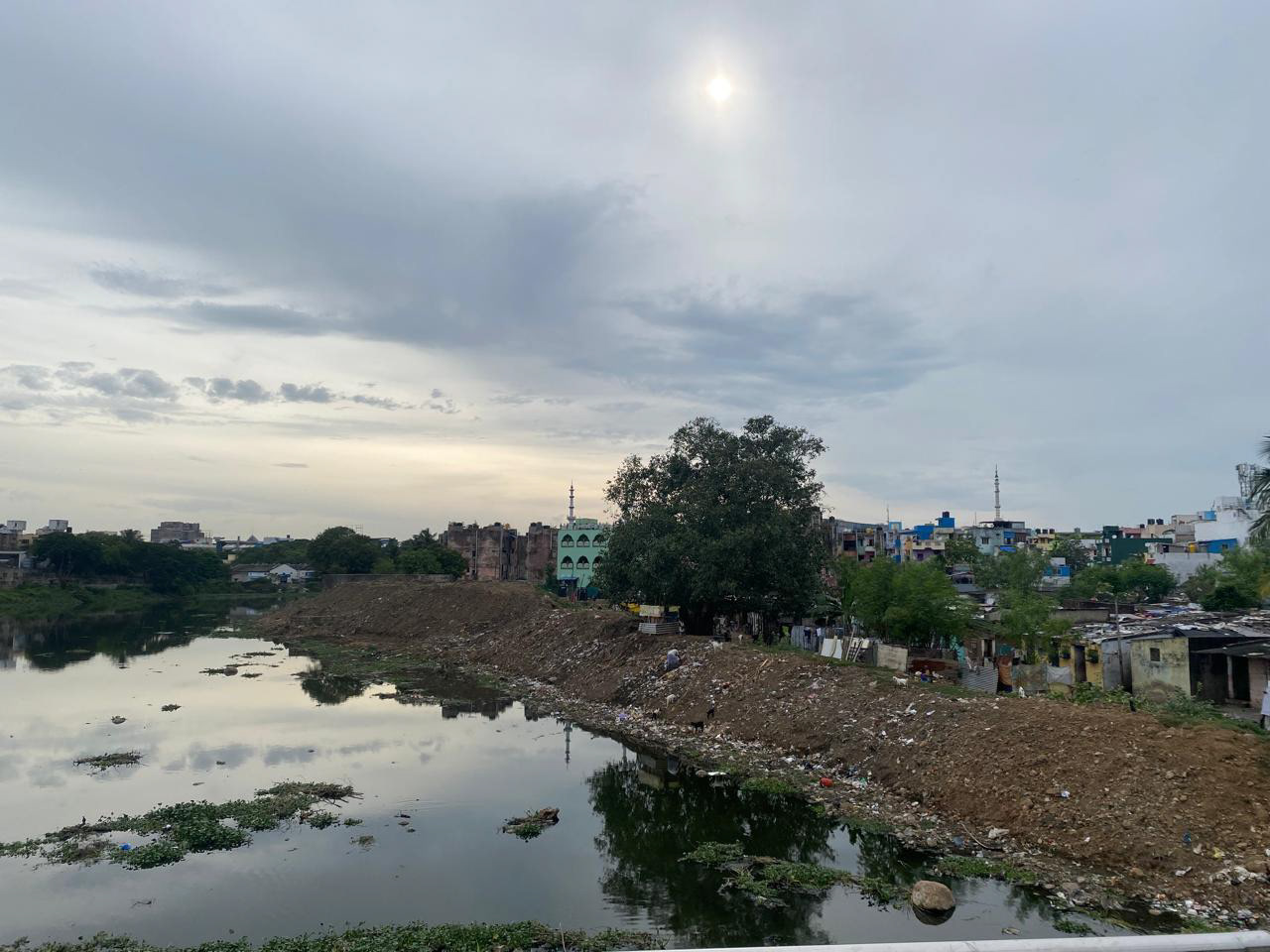
In this project, Dhideer Nagar serves as a projective site, a specific place through which a broader condition is examined and a replicable framework is tested. It is not treated as an isolated case requiring a singular solution, but as representative of the pressures facing informal riverfront communities across Chennai and beyond. The proposal developed here is not a prescription for Dhideer Nagar alone but an argument directed at the state about how it might fundamentally rethink its approach to communities that face the same compounding conditions of flood vulnerability, insecure tenure, and displacement threat wherever rapid urbanisation meets the urban poor.